

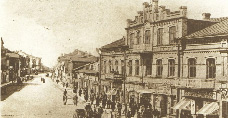
Panevėžys has grown from a strategic settlement into a vibrant city, retaining its historical roots while embracing modernity.
The history of Panevėžys started more than five hundred years ago. By the letter of September 7th, 1503 the Grand Duke of Lithuania and the King of Poland Alexander donated the land plot between the rivers Lėvuo and Nevėžis on the condition that a church has to be built there.
The first wooden church built on the right bank of the Nevėžis has not survived and its descendant St. Peter and Paul's Church has changed its location and has been rebuilt for several times.
Each age has left unique traces in the history of the city.
In the middle of the XVIth century on the left bank of the Nevėžis the New Panevėžys appeared. It soon outdid the Old Town.
The first stonework building- the Archives of the Court was built in the begining of the XVIIth century. It is the oldest building of the city which has survived to this day.
In the begining of the XVIIIth century the Pior Monks built a church, established a monastery and opened the first school in the city.
Till the XIXth century Panevėžys was a town of small wodden buildings very often devastated by wars and fires. In the XIXth century, after the railway was built and the first factories were established the city expanded sixteen times and Panevėžys became a strong regional economical and cultural centre firmly holding this position until now.